Electric Pole Attachment Standards
Electric Pole Attachment Standards | New Braunfels Utilities
Guidelines for Safe, Consistent Use of NBU Poles
New Braunfels Utilities maintains standards for how equipment and facilities are attached to utility poles it owns and manages. These standards help protect the safety and reliability of our system while giving communications, broadband, and other service providers a clear, consistent process for requesting access.
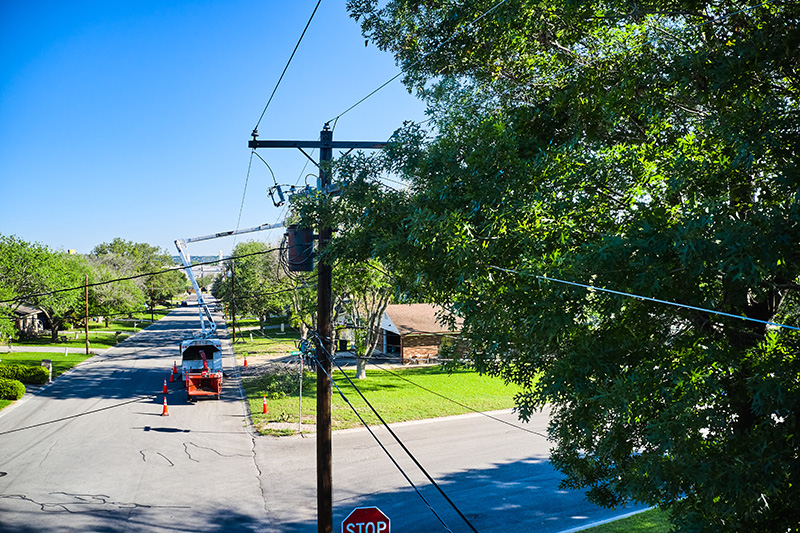
Whether you’re planning a wireless installation or need permission for communications infrastructure attachments, this page explains what to expect and where to find the forms and requirements you’ll need.
For Your Safety
1. Safety Risks
Poorly managed attachments can create safety concerns, including:
• Placement too close to high-voltage electric lines
• Improper installation or lack of required inspections
• Increased fall hazards for utility lineworkers
• Higher fire risk during storms or high-wind conditions
Even a single unapproved or sagging attachment can pose risks to utility crews and the public.
2. Reliability and Outage Impacts
Additional equipment on utility poles can contribute to:
• Added weight and structural stress, especially during ice storms and high winds
• Increased likelihood of lines becoming tangled, damaged, or pulling power lines down
• Slower outage restoration due to congested pole space
During emergencies, overcrowded poles can result in longer service interruptions.
3. Cost Impacts
Managing pole attachments can also create additional costs, including:
• Pole replacements when capacity limits are exceeded
• Make-ready work to safely accommodate new attachments
• Ongoing inspections and enforcement
These costs ultimately affect the overall utility system and the customers it serves.
Below are the Pole Attachment Standards and related forms you might need to begin or manage your attachment request. Use the buttons to view the standard, submit applications, or find supporting documentation.